
Tag Archives: Chicago Towing

Preventing Winter Car Accidents

Preventing Winter Car Accidents

We at Chicago Towing care about our customers safety – and it’s important, deep in this winter, to understand safe driving techniques for icy or snowy roads that might have slippery traction and low amounts of visibility. In order to lower the chances of having an accident, follow our tips for preventing winter car accidents. And if you do have an accident, don’t hesitate to contact us for expert roadside assistance.


Never Brake Suddenly

Ice is going to cause your car to slide whether you’re braking slow or fast, but what really makes the difference is when your car is going to stop. If you slowly decelerate your vehicle before stopping, it gives it less physical momentum while it’s on ice. This means even if you’re going to slide, you won’t be sliding as far, and it will be easier to reclaim control of the vehicle. If you’re on ice and suddenly break, you will skid for a while, which can be potentially very dangerous.


Always be aware of the Windshield

Poor visibility causes many snowy weather automobile accidents. It’s important to keep track of when it will be rainy or snowy by keeping watch of daily weather reports before heading out on the road. If you have to drive around inside the snow, make sure that your windshield has been cleared of snow or ice, and that the window wipers work.


Routine Inspections

It can be a smart move to inspect and upgrade your vehicle. Get your car checked out by expert technicians, and perhaps install brand new winter tires with a strong tread that can easily work with icy or snowy conditions. We also recommend applying a rust coat before taking it on salty roads, which will prevent exponential corrosion and damage. Also, make sure your brakes are always tested throughout the year – and if they slip, make a weird noise, or feel generally like their not working, make sure to replace them before embarking on an icy journey.


Maintain Tire Pressure

Any low air temperatures will cause the tire pressure of your car to drop, and if it drops enough, it can be quite dangerous. Make sure that your tires are always fully filled, and even regularly tested. Full tires work much better, and are much better equipped to handle any cold weather related challenges that might pop up on the road – for reasons such as an increased efficacy of the tire’s treads.
Why Keys sometimes don’t turn in ignition

Why Keys sometimes don't turn in ignition

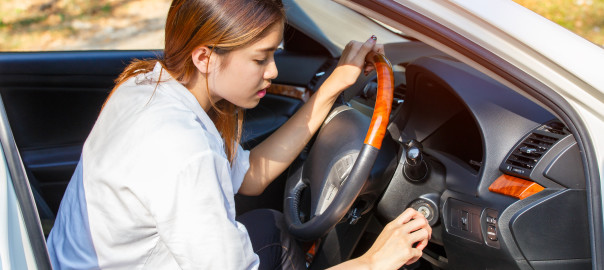
It can be quite annoying when you put your key inside your vehicle’s ignition slot and it won’t turn. Your mind can be floating everywhere trying to figure out what’s wrong, with no clear cause or reason for the key’s malfunctions. Here’s Chicago Towing’s quick guide to reasons keys sometimes don’t turn inside ignition.


If you’re car owner without any warranty on your vehicle, jamming keys can pose both a severe annoyance and a high cost. If you need to jiggle the ignition in order to start the car, it’s a sign of problems starting, and you should contact a professional right away. Poor design can be a cause of ignition problems. Another potential cause is a lousy connection between the transponder microchip inside the car key and the car’s computer. This reconnection is a highly technical operation best handled by an affordable expert automobile locksmith. It’s best to handle these situations as soon as possible, as with a faulty ignition, you can get stranded anywhere.


You may have any of these following issues:

  • Hard turning key in ignition
  • Ignition is stuck or sticking
  • Key comes out of ignition dirty
  • Key gets stuck in particular position
  • Key is frozen


An expert locksmith can easily handle this sort of job, at a fraction of the cost that it would require at an automobile dealership.


Fixing Ignition Keys that get Stuck

  • Check to see if the parking brake light is on, so you don’t roll away when you turn the key.
  • First apply pressure to the key, and turn the steering wheel to find a spot to turn the key.
  • Most cars won’t allow you to turn the key unless you are in park position.
  • If this doesn’t work, clean out and then lubricate the cylinder of the lock with electrical contact cleaner, and a small spray of silicone or graphite. Make sure not to drip any of these solutions onto the seat or carpet, and keep the windows open to prevent any fumes. Of course, avoid any flames or sparks near the lock cylinder, as these solutions are often flammable.
  • If the key still won’t turn, the issue is likely inside the tumbler which may be stuck locked. Tap the face of the lock cylinder with a tack hammer for about 60 seconds.
  • If they key still won’t turn, inspect the key for any distortions by laying it on a flat surface and seeing if it looks crooked or arched. If it is, hit it with a heavy object to flatten it out, but try to avoid any heavy metal object as it can cause further distortion to the key’s grooves.
  • If the key still won’t turn insert it in the ignition and tpa it lightly with a hammer.
  • If all these measures fail, contact a licensed, professional locksmith.

Towing Safety Tips

Towing Safety Tips

Cars break down; it’s a fact of life. Even when you take excellent care of cars, they are still likely to experience some form of mechanical problems every now and then. However, towing isn’t always a completely clean and orderly operation. Things can go wrong as you go along with it – here’s Chicago Towing’s list of the 9 most serious towing safety tips to keep in mind while one is towing a vehicle.


Dangerous Operation

Anybody involved with the towing operation should never stand on the sides of the truck, since a spontaneous turn could be incredibly dangerous for everyone involved. For maximum safety, make sure to ride along inside the truck with all doors securely locked.


Tire Safety

Make sure that any flat tires are fixed before the vehicle is hoisted up onto the truck. Make sure to change all tires in order to prevent an unstable tow load from suddenly flipping over due to unequal pressure. Just to be safe, it’s smart to check the tire pressure gauges.


Turning Suddenly

Sharp turns and steep hills should be handled very slowly, since going fast in these situations can either seriously damage your truck’s chassis or axle, as well as risk the possibility of flipping over completely.


Driving Blind

Dark or inclement weather reduces visibility – so should be handled with bright headlights, and by driving slowly.


Towing Inappropriate Vehicles

Don’t connect large vehicles to SUVs or sedans, since trailer hitches don’t work with all vehicles – only vehicles that meet towing requirements should be hitched up.


Swaying from Side to Side

Drive slowly and follow the speed limit to prevent the truck from swinging around, which can be quite dangerous especially at a high speed.


Always bring Emergency Equipment

Make sure to always carry a fully stocked emergency kit with a flashlight, red triangle lamp, spare tires, a tool set, first aid kit, water, and some food.


Never Rush

Don’t drive really fast while towing. As a ground rule, make sure to always have enough space to brake between your car and any vehicles in front or behind you.


Use the Breaks

Whenever making any turns, slowly and gradually apply the brakes for stable and safe driving. Sudden application of the breaks can be equally as dangerous on turns.


December Parking Advice in Chicago

December Parking Advice in Chicago

With the Christmas season fully in effect, Chicago traffic can be a bit overwhelming. Between a swelling influx of tourists and Chicagoans coming home to visit family, and the hectic crowds embarking on holiday shopping expeditions, being a driver in the Windy Season can be somewhat more difficult around this time of year. Malls and parking lots are full of people; and although most people don’t know this, parking lots are actually very common settings of traffic accidents – from rear enders, to even hit and runs. Additionally, crowded distracting parking lots are perfect environments for trouble makers like pickpockets, carjackers, thieves, and other vandals. In order to keep yourself, your vehicle, and the people you love safe – follow Towing Chicago‘s official Chicago parking safety tips.


  • Avoid shopping (and parking) at the most busy times of day. This is usually at weekday nights and weekends.
  • Consider using valet parking – this way you don’t have to search for a space, and you won’t have to worry about whether your car is staying safe.
  • Drive slowly in parking lots, and always use your turn signal.
  • Never park in tight parking lots – this way you can avoid scrapes and bumps.
  • Park farther away from buildings to avoid the chances that shopping carts or cars backing up might dent or smack your vehicle.
  • While walking to your car or backing out, make sure to be aware of other cars that are backing out or in at the same time.
  • Always park in a highly visible area that’s brightly lit.
  • Roll up your car’s windows and make sure all doors are locked.
  • Always keep the number of a reliable service like Chicago Towing on hand.
  • Always have your keys on hand while you’re walking to your car – as well as your phone, just in case you need to quickly dial 911.
  • Never leave valuable possessions like expensive clothes or electronics in a visible area of your parked car while you’re away from it.
  • When you’re walking to your car, look around for any suspicious people lingering inside the area.
  • If you feel unsafe, ask a security guard or nearby person to escort you to your car.
  • Put all of your shopping bags inside the trunk, rather than conspicuously in the back seat of the car.
  • Lock the car doors as soon as you enter the vehicle.

Unofficial Traffic Crimes

Unofficial Traffic Crimes

There’s traffic crimes – the type that can get one arrested or ticketed – and there’s traffic infractions, that break the collective ‘rules of the road’ and can potentially create dangerous, or minimally, annoying situations for other drivers. Here are some of Towing Chicago‘s choices for the worst offenders.


Refusing to use blinkers

There’s nothing more annoying than sitting in traffic and have somebody quickly pull in front of you, causing you to surprisingly slam on your breaks. If they used their turn signal, it wouldn’t be nearly as startling and dangerous.


Parking Spot Thievery

If someone is obviously waiting for someone to pull out so they can take their parking spot, don’t swoop in and take it – it’s straight up rude and completely inconsiderate.


Following people walking to their cars

Sometimes it’s hard to find a parking spot – we can all identify with the maddening search for an empty spot when all you want to do is get home and take your shoes off. However, it’s flat out creepy to stalk someone leaving a store carrying bags to their car, because not only is it vaguely threatening, but it rudely passively asks the person to walk faster – just circle around the block and drive slowly to look for an available spot.


Switching between bike and road rules

If you’re riding a bike, make sure to follow all the other collective rules that would apply to an automobile driver. Stop at all stop signs and lights, face the correct way, and obey all right of way laws. Just because you’re on a bike doesn’t mean you’re diplomatically immune from all the rules of the road. This goes the same to motorized wheelchairs – which should be operated on the sidewalk, where it’s much safer.


Waving Thank you

Being stuck in traffic can be aggravating. Which is why it’s such a  sigh of relief when somebody finally courteously allows you to pass to get into your needed lane. If you’re being allowed to pass into a lane, be a person and wave thank you to the driver interrupting their schedule to slow down enough to allow you to merge – it will show them that their kindness and courtesy is appreciated, and will encourage them to demonstrate similar kindness to other strangers. Good deeds beget other good deeds – especially on the road.

Winter Towing

Winter Towing

Now that the weather is getting colder, many parts of Chicago are already freezing. Towing can be a very hard task to complete, and towing in icy weather is even harder – even when you’re using a truck complete with four wheel drive. Here are our tips for safe Winter towing.

Snow Chains

This is an absolute must. Tire chains provide the extra traction that’s necessary for safe driving on snow or ice, and lessen any chances of jackknifing on a cold highway. Park your truck on a flat area with 10 feet of clearance in front and behind your truck. Put a chain down next to both front tires, with studs facing down. Put the end of each chain on the front of the tire where it’s making contact with the ground. Slowly drive the truck forward until the tires are centered onto the chains. Pull each end of the chain over the top of each tire, giving a small amount of slack room. Attach the closing device to each end of the chain – and remember that some snow chains will need you to install tension cords on the chain links using hooks or nuts. Drive the truck a short amount of room within the recommended speed limit paying attention to whether you hear any jarring noises that might mean that the chains aren’t tight enough.

Attaching the Towing Chain

Back up the truck to the back of the towed vehicle – ideally the area next to the driving wheels, since that end’s axle is likely more durable. If that part of the vehicle isn’t accessible, just use the other one. Make sure the two vehicle’s bumpers aren’t any more than 3 feet away from each other, and place the tow truck in parking mode. Wrap one side of the towing chain over the top of the truck’s back axle, making sure that it’s not accidentally wrapped around any wires or hoses. Put one side of the chain over the other end, and attach the chain end hook to the link above the axle. Make sure the chain loops are as tight as possible. Do the same actions to the other end of the chain.

Towing

Make sure both vehicle’s wheels are parallel and straight – ask the driver of the stuck vehicle to place their car in neutral and stay inside the vehicle. This will help the vehicle’s physics remain in synchronization with each other. Put your truck in the lowest gear facing forward to help prevent the tires from spinning or slipping. Slowly accelerate the gas pedal to slowly increase tension on the chain, making sure your wheels are still straight. Drive straight at a steady slow pace while traction increases, and once you’re moving more smoothly, make your speed faster at a very slow pace. Just be careful, as the drivers in front of you may pose a danger – the main danger being a driver who strikes their brakes suddenly – so it’s best to keep as much distance between your truck, the vehicle you’re towing, and any other cars in front of you. Once the towed vehicle is on firm non icy ground, stop the truck in a safe place – and of course, always make sure that your brake lights are on when you’re stopping.

Tow Truck Facts you may not know

Tow Truck Facts you may not know

Towing, if you haven’t already learned it, is the art of coupling two or more objects (usually vehicles) together so that they can be pulled or transported by a power source – which can be a human, animal, vessel, or other vehicle. IN the past, before we all relied on vehicles, animals and people did all the towing work. Nowadays boats and motorized land vehicles do it – boats are usually used in maritime or aircraft related industries – and on land, vehicles are used to tow other vehicles. Here’s some facts about tow trucks you might not know:


Tow Trucks don’t equal Motor Carriers

Tow trucks are motorized land trucks meant to transport disabled, broken, impounded, or wrongly parked vehicles. Motor carriers are different – they are trailers meant to carry cars, usually for commercial purposes – and usually for the efficient transfer of passenger vehicles.


Start of the Tow Truck

Tow trucks were invented in 1916 by SR. Ernest Holmes – who needed to improvise a way to use blocks, ropes, and manpower to pull a car out of a creek. He developed the tow truck design, which involves a flat surface behind the truck which an operate as a bed that can easily carry a car.


Evolution of Tow Trucks

At first only traditional tow trucks existed, but as the car industry grew, the tow truck evolved over times. Today, there’s over five kinds of tow trucks: notably the Boom, Wheel-Lift, Hook and Chain, Integrated, and Flatbed (the most commonly used.)


Tow Truck Museum

The International Towing and Recovery Hall of Fame and Museum in Chattanooga, Tennessee (the hometown of Sr. Ernest Holmes) shows antique tools, wreckers, tow trucks, equipment, and photographs documenting the history of the industry created by Holmes.


Tough Regulations

The tow trucking industry is heavily regulated by Congressional laws and acts – in order to drive a tow truck, you must possess a license for it – so not everyone can just get behind the wheel from off the street and start long hauling or recovering cars.


Safest Option

Flatbed tow trucks are the most commonly used because they are the absolute safest and simplest choice. Their design gets rid of the possibility that you’ll cause extra damage to your car’s underside and transmission, and they don’t allow the car’s wheels to hang off the sides while it’s being transported.

Hiring a Professional for Heavy Hauling

Hiring a Professional for Heavy Hauling

Some of the most common equipment that requires heavy hauling is heavy machinery or construction equipment. While many companies have their own hauling equipment, lots of others don’t, or perhaps they need to use their hauling equipment for another big project.


Regardless of the project where it’s implemented, heavy hauling is a difficult and technically complex job. The kind of equipment that requires heavy hauling is expensive and delicate, despite its extreme weight. Due to the extreme value of this equipment, and the magnitude of the job’s complexity, it’s totally necessary to hire a professional hauling company. It’s of major importance that they are trustworthy, and have the necessary experience and expertise to safely finish the haul without causing any damage to the vehicle.


Experience with Heavy Hauling

When you’re transporting extremely heavy and large equipment, the haul’s route should be determined in advance. There’s many detailed aspects to the ride that absolutely need to be considered, including the height of overpasses. Both equipment and even the overpass could be damaged, which could not only result in heavy costs but also put people’s lives at risk. There will be many potential obstacles including weight limits on roads and bridges. A truly professional hauling company will know exactly how to find and expertly navigate the best route to haul out the equipment to it’s rightful destination.

Read More →

Different Kinds of Tow Trucks

Different Kinds of Tow Trucks

There’s three main kinds of tow trucks commonly used, but five common categories of equipment. The three main kinds of trucks are used for different crisis or labor scenarios like emergency towing, and determine what kind of tow truck that a service will send out. The three main kinds of tow trucks are:

Hook and Chain or Sling Trucks

Hook and chain tow trucks are rarely used today because, due to their design, damage is often sustained to the bumpers or front end of the cars. This truck works by looping a chain around the frame or axle of the vehicle, which is then wound up with a boom winch. Sometimes the sling truck is used on towing vehicles that have suffered an accident, or are missing one or both of the rear wheels, since the car can’t be securely towed by another kind of wrecker truck.

Flatbed, or slide trucks

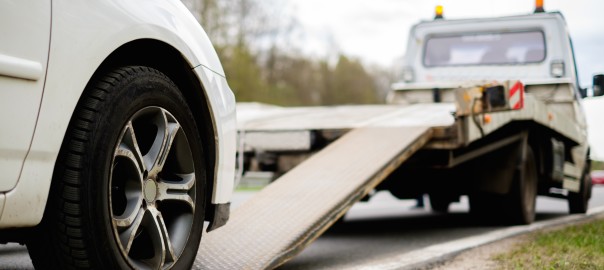
These trucks are fit with beds that can be hydraulically positioned at an incline, and slid down to ground level – the truck is then driven onto the bed, or pulled on to it with a truck mounted winch. This is the most common and popular kind of tow truck used for emergency towing.

Read More →